


Car Wash and Wax Service: Protect Your Vehicle's Finish

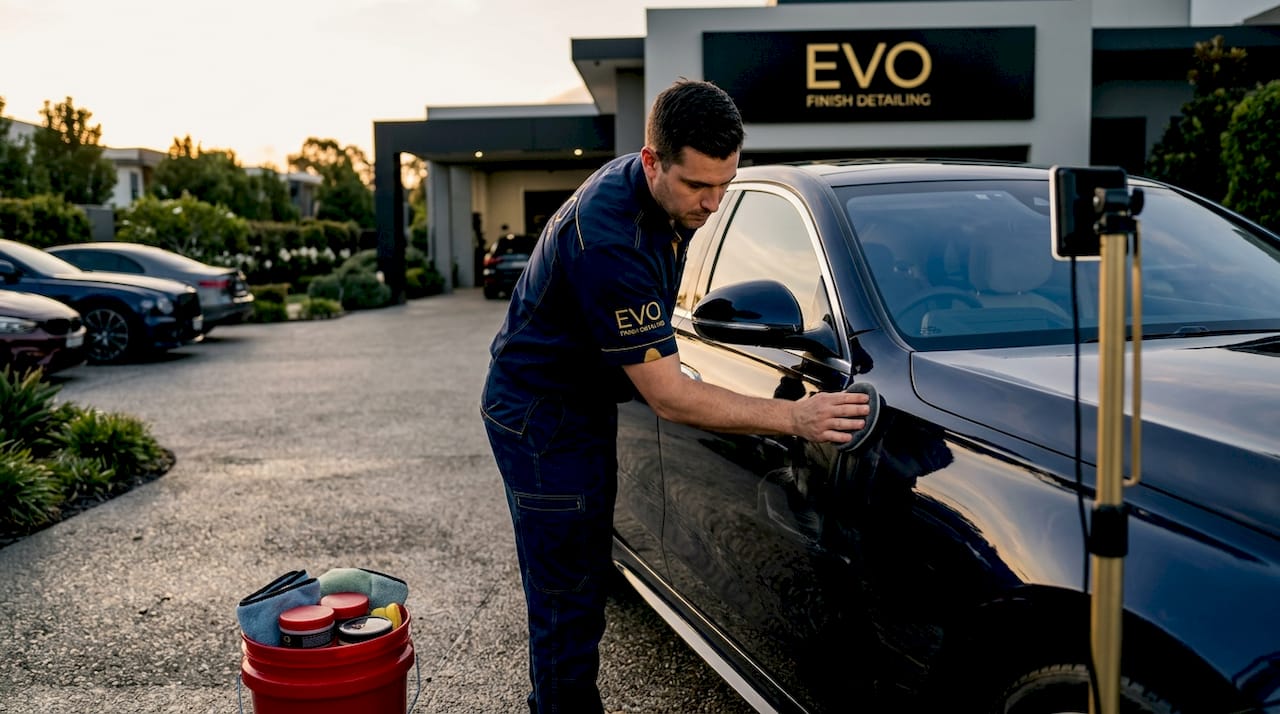
A car wash and wax service is defined as a two-stage professional process that combines thorough exterior cleaning with a protective wax coating to shield your vehicle’s paint from environmental damage. This is not a luxury detail reserved for car enthusiasts. It is a practical maintenance step that preserves your clear coat, maintains resale value, and prevents contaminants like bird droppings, tree sap, and road salt from etching permanently into your paint. At Evofinish, we see the difference every day between vehicles that receive regular professional care and those that don’t. The gap in paint condition after just one season is striking.
What tools and products make a car wash and wax service effective?
Professional-grade results start with professional-grade materials. The products and tools used in a quality car wash and wax service are not the same ones sold in most retail aisles, and that gap in quality directly affects how long your paint stays protected.
The core products every effective service relies on include:
pH-balanced car wash soap: Strips dirt without degrading existing wax or sealant layers
Natural carnauba wax: Delivers a warm, deep gloss with moderate durability, typically lasting four to eight weeks
Synthetic polymer wax: Bonds more firmly to clear coat and lasts three to six months, making it the better choice for daily drivers
Spray wax: A fast-application option ideal for maintenance between full wax sessions
The tools matter just as much as the products. Microfiber wash mitts trap dirt particles away from the paint surface instead of dragging them across it. The two-bucket method, one bucket for clean soapy water and one for rinsing the mitt, keeps contaminated water from going back onto your vehicle. High-quality microfiber drying towels prevent the water spots that cheaper terry cloth towels leave behind.
Pro Tip: Always choose a car wash soap labeled “paint-safe” and “biodegradable.” Dish soap strips wax and is harsh on rubber trim. Products like Meguiar’s Gold Class or Chemical Guys Honeydew Snow Foam are widely used by professional detailers for good reason.
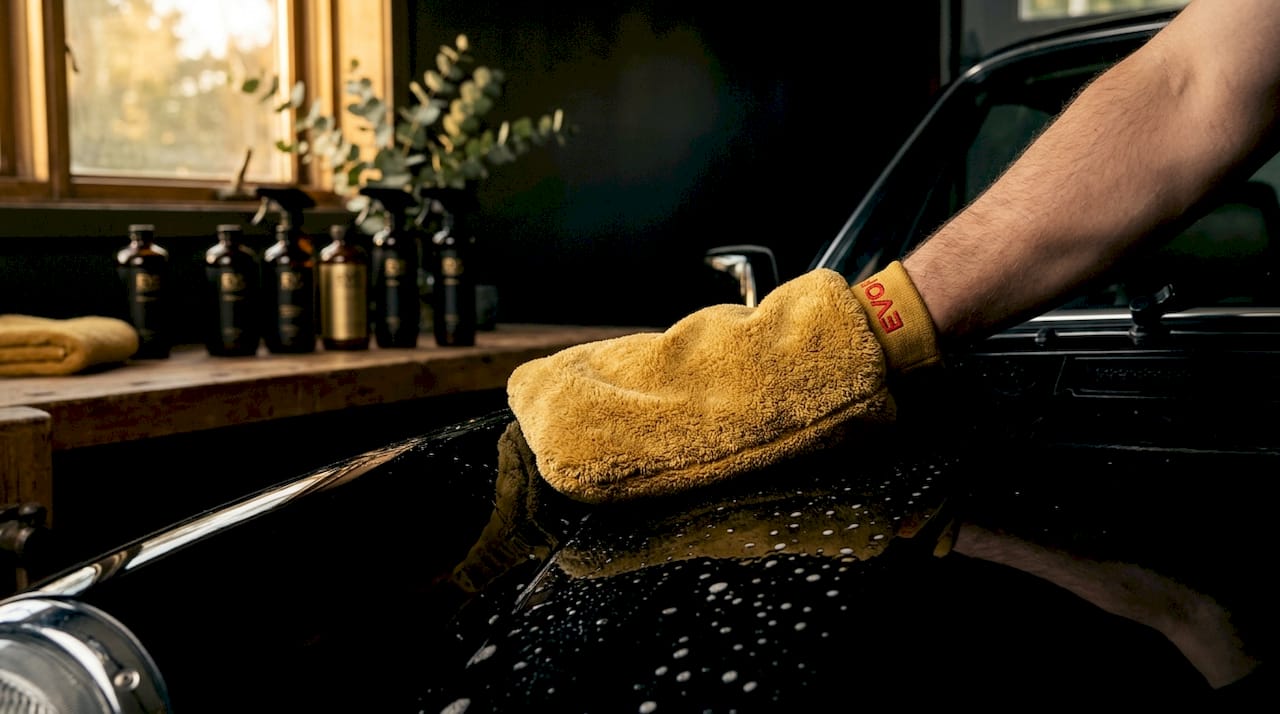
When comparing wax types, synthetic options win on durability and ease of application. Natural carnauba wax wins on visual depth and gloss. For most car owners who want lasting protection without frequent reapplication, a quality synthetic wax applied by a professional auto detailing service delivers the best return. You can read more about exterior paint protection techniques that professionals use to extend these results further.
How to properly perform the car wash and waxing process step by step
Executing a car wash and wax correctly requires more than soap and effort. The sequence matters, and skipping steps is where most paint damage actually happens.
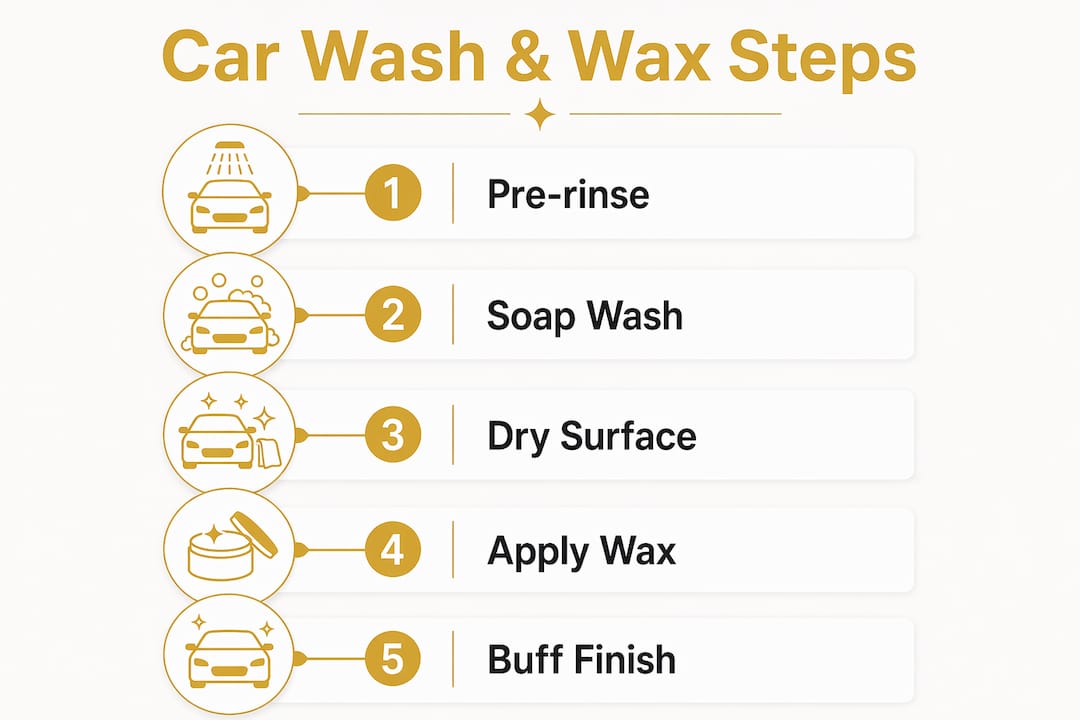
Pre-rinse the entire vehicle using a strong stream of water to dislodge loose dirt, pollen, and debris before any mitt touches the surface.
Fill two buckets: one with pH-balanced soap solution, one with clean water for rinsing your mitt after each panel.
Wash in straight, back-and-forth motions across each panel. Circular washing motions cause swirl marks that dull the clear coat over time. This is one of the most common DIY mistakes.
Rinse each panel immediately after washing it to prevent soap from drying on the surface.
Dry with a clean microfiber towel using a blotting or straight-drag motion. Never rub in circles.
Inspect the surface for remaining contaminants. A clay bar treatment at this stage removes bonded particles that washing cannot lift.
Apply wax in thin, even coats using a foam applicator pad. Work one panel at a time in straight lines.
Allow the wax to cure until it hazes, typically two to five minutes depending on the product and temperature.
Buff off with a clean microfiber towel using light, overlapping strokes.
Timing is a factor most car owners overlook. Washing in direct sunlight causes soap and water to evaporate before you can rinse, leaving residue and water spots baked into the surface. Early morning or overcast conditions produce noticeably better results.
Step | Common Mistake | Professional Standard |
Pre-rinse | Skipping it entirely | Full vehicle rinse before any contact |
Washing motion | Circular scrubbing | Straight back-and-forth strokes |
Drying | Air drying or rough towels | Microfiber blotting immediately after rinse |
Wax application | Thick, uneven coats | Thin, even coats one panel at a time |
Wax removal | Waiting too long | Buff off at the correct haze stage |
Pro Tip: In winter months, apply a synthetic wax or paint sealant rather than carnauba. Cold temperatures prevent carnauba from bonding properly. Check out winter detailing guidance for seasonal adjustments that protect your paint when conditions are harshest.
How often should you get your car professionally washed and waxed?
Frequency is not one-size-fits-all. Your environment, driving habits, and storage conditions all determine how quickly contaminants build up and how fast your wax layer degrades.
For washing, the general professional standard is clear. Washing every five to seven days prevents contaminants like pollen and road salt from bonding permanently to your paint. In coastal areas with heavy salt air, or during peak pollen season in the Southeast and Midwest, that interval becomes a protective necessity rather than a preference.
For waxing, the schedule depends on the product type:
Carnauba wax: Reapply every four to eight weeks, especially after heavy rain or sun exposure
Synthetic polymer wax: Reapply every three to six months
Ceramic coating: Professional-grade protection lasting one to three years, applied by a certified detailer
Environmental factors that accelerate wax degradation include:
Parking under trees (sap and bird droppings eat through wax quickly)
Coastal or high-humidity climates
Extreme UV exposure in states like Arizona, Florida, and Texas
Frequent highway driving that increases road debris impact
Regular washing is not overwashing. Frequent washing maintains your factory clear coat against weather-related wear and is one of the most cost-effective forms of vehicle asset management available to any car owner.
Pro Tip: If your vehicle is garaged overnight and driven mostly on clean suburban roads, you can extend washing intervals to ten to fourteen days. If you commute on salted highways in winter, treat every five days as your baseline.
What are the benefits of professional car wash and wax services over DIY?
DIY car washing is better than nothing. Professional car wash and wax services are better than DIY in nearly every measurable way, and the reasons go beyond convenience.
Professional detailers use surface prep and contaminant removal steps that most car owners skip entirely. Clay bar treatment, iron decontamination spray, and panel-by-panel inspection before wax application are standard in professional workflows. These steps determine how long the wax actually bonds and protects. Without them, wax sits on top of embedded contaminants and fails faster.
The advantages of choosing a professional auto detailing service include:
Access to professional-grade products: Detailers use compounds, sealants, and waxes not sold in retail stores
Consistent, even application: Machine polishers and trained technique produce results that hand application rarely matches
Time savings: A full wash and wax that takes a professional ninety minutes can take an untrained car owner four hours with inferior results
Paint protection expertise: Professionals identify early signs of paint damage, oxidation, or clear coat failure before they become expensive problems
Resale value protection: A well-maintained exterior adds measurable value at trade-in or private sale
On pricing, the range is wide. Express car washes start under $10, while comprehensive hand wax and detailing packages run from roughly $99 to $350 or more depending on vehicle size and service depth. That investment, spread across a vehicle’s lifespan, costs far less than a single paint correction or panel respray. Understanding the full value of detailing helps put those numbers in perspective.
Wax acts as a sacrificial barrier between your clear coat and fast-acting contaminants like bird droppings and salt air. When that barrier is applied correctly by a professional, it absorbs the damage instead of your paint. That is the core argument for professional service over a rushed DIY session.
How to select the best car wash and wax service provider
Not every service provider delivers the same quality, and the difference between a mediocre wash and a meticulous detail shows up within weeks on your paint. Choosing the right provider requires asking the right questions upfront.
Key criteria to evaluate before booking:
Service offerings: Does the provider offer a full wash and wax, or only an express car wash? Confirm whether clay bar prep, hand waxing, and drying are included.
Product transparency: Ask what wax or sealant products they use. Providers who cannot name their products are likely using low-grade bulk supplies.
Customer reviews: Look for consistent mentions of paint care, attention to detail, and repeat bookings. A single five-star review means less than fifty reviews averaging 4.8.
Mobile service availability: A mobile car wash that comes to your home or office removes the scheduling friction that causes most car owners to delay maintenance.
Pricing transparency: Reputable providers publish package prices. Hidden fees for “extras” that should be standard are a red flag.
Satisfaction guarantee: Providers confident in their work offer to correct any issues at no charge. Ask about this policy directly.
For car owners who want advanced protection, ask whether the provider offers ceramic coating or paint sealant upgrades beyond standard wax. These options extend protection significantly and are worth the additional cost for vehicles exposed to harsh climates. A professional detailing guide can help you understand exactly what to expect from a quality provider before you commit.
Key takeaways
A professional car wash and wax service protects your vehicle’s paint, extends clear coat life, and delivers results that DIY methods cannot consistently match.
Point | Details |
Wash frequency matters | Washing every five to seven days prevents contaminants from bonding permanently to paint. |
Wax type determines durability | Synthetic polymer wax lasts three to six months; carnauba wax requires reapplication every four to eight weeks. |
Technique prevents damage | Back-and-forth washing motions and the two-bucket method protect clear coat from swirl marks. |
Professional prep adds value | Clay bar treatment and contaminant removal before waxing extend how long protection lasts. |
Timing affects finish quality | Washing in cooler hours or overcast conditions reduces water spots and soap residue. |
What I’ve learned from years of precision detailing
Most car owners underestimate how fast environmental damage accumulates. A vehicle parked outside in Florida or coastal Georgia for one summer without regular waxing can develop oxidation that requires machine polishing to correct. That correction costs more than a full year of professional wash and wax appointments.
The detail I see overlooked most often is timing. Customers bring us vehicles that have been washed in midday sun, dried with the wrong towels, and waxed over contaminated surfaces. The wax looks fine for two weeks and then fails. The process matters as much as the products.
My honest recommendation: balance regular DIY rinses between professional sessions, but never skip the professional wax application. A trained detailer catches what you miss, applies product evenly, and uses prep steps that make the protection last. The small, consistent investment in professional care prevents the large, painful cost of paint correction or a full respray. Mobile detailing options make this easier than ever. There is no longer a reason to delay service because of a busy schedule when quality care comes directly to your driveway.
— EVO
Let Evofinish handle your car wash and wax needs
Evofinish is a mobile auto detailing service that brings professional-grade car wash and wax care directly to you. We come to your home, office, or wherever your vehicle is parked. No waiting rooms. No drop-offs. Just meticulous, guaranteed results delivered on your schedule.
Our wash and wax packages use pH-balanced soaps, premium synthetic waxes, and microfiber tools that protect your paint at every stage. Every service includes a thorough inspection, proper surface prep, and a satisfaction guarantee. Pricing is transparent, packages are flexible, and our team treats every vehicle with the same precision detailing approach regardless of make or model. Book your detail online today and experience the difference that professional mobile care makes.
FAQ
What does a car wash and wax service include?
A professional car wash and wax service includes a full exterior wash using pH-balanced soap, surface preparation such as clay bar treatment, and application of a protective wax or sealant layer. The process removes contaminants and leaves a protective coating that shields paint from UV rays, bird droppings, and road salt.
How long does car wax protection last?
Carnauba wax typically lasts four to eight weeks, while synthetic polymer wax provides protection for three to six months. Ceramic coatings applied by a professional detailer can last one to three years depending on the product and maintenance routine.
Is a mobile car wash as effective as a traditional car wash?
A mobile car wash performed by a trained professional is equally effective and often more thorough than a tunnel or express car wash. Mobile detailers work by hand, giving each panel individual attention that automated systems cannot replicate.
How often should I wax my car?
The recommended waxing schedule depends on your wax type and environment. Most car owners benefit from professional waxing every one to three months, with more frequent applications in coastal, high-UV, or high-pollen regions where contaminants bond faster to unprotected paint.
What is the difference between an auto detailing service and a standard car wash?
A standard car wash removes surface dirt. An auto detailing service includes deep cleaning, paint decontamination, wax or sealant application, and interior care. Detailing addresses paint condition and long-term protection, while a basic wash addresses appearance only.
Recommended
Comments